nlpoktatasikozpont.hu / Articles / Explainer
Group Dynamics and Psychological Safety in Change Trainings
Group format and psychological safety are structural requirements for training that addresses identity, not optional decorations.
The Group as a Practice Laboratory
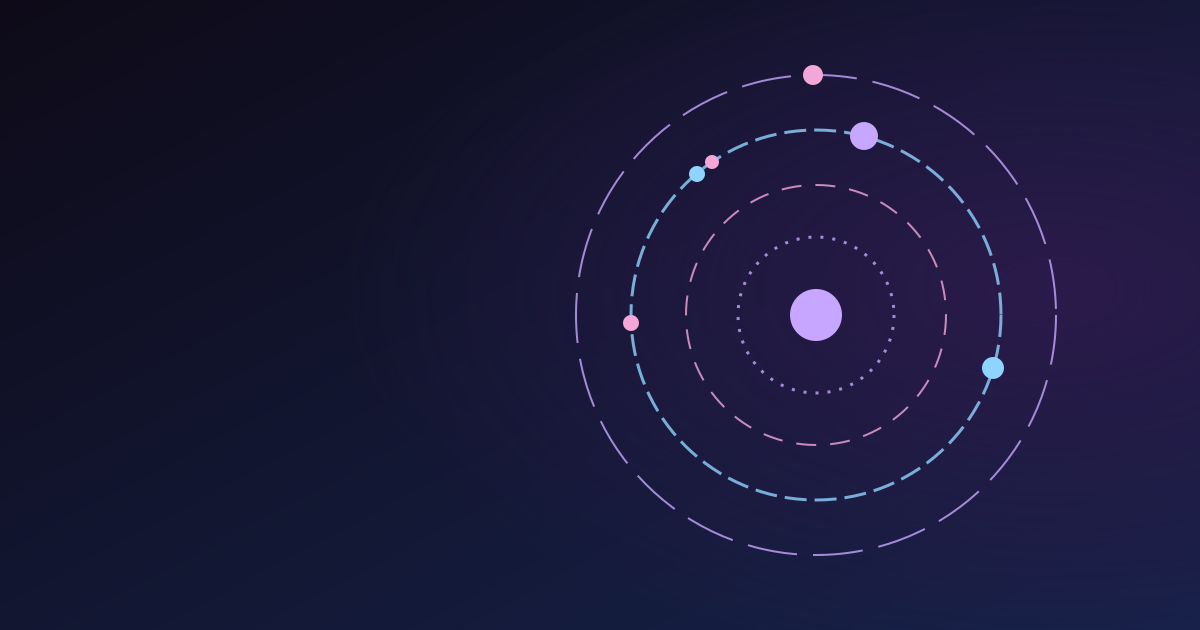
Identity does not exist solely within the individual mind. It organizes itself in the space between people. When you enter a training group, you step into a controlled environment designed to replicate real-world interactions while removing the usual consequences of failure. This separation allows you to experiment with new ways of being that your nervous system might otherwise reject as unsafe.
In this laboratory, the focus shifts from theoretical understanding to embodied experience. You cannot learn to regulate your nervous system or rewrite your narrative self-model by reading about it. You must feel the shift in your body while interacting with others. The group provides the mirror and the resistance needed to make these internal changes visible and tangible.
The structure of the session ensures that every interaction serves a learning purpose. Participants are not merely discussing their problems; they are enacting their patterns in real time. This enactment reveals the automatic scripts that drive behavior. Once these scripts become visible, they can be interrupted and replaced with more adaptive responses.
This approach aligns with the principles of embodied cognition, which posits that thinking emerges from physical interaction with the world. The group setting provides the rich sensory data required to update the brain's predictive models. Without the presence of others to react to your new behaviors, the neural pathways required for lasting change remain unformed.
- The group acts as a safe container for behavioral experimentation
- Real-time interaction exposes hidden identity scripts
- Embodied experience updates predictive brain models
- Safety allows for the testing of new relational patterns
Psychological Safety as a Precondition
Psychological safety is not a soft skill or a nice-to-have atmosphere. It is the biological prerequisite for learning complex new behaviors. When the nervous system detects threat, it defaults to survival modes: fight, flight, or freeze. In these states, the prefrontal cortex goes offline, making high-level cognitive processing and behavioral flexibility impossible.
A training group establishes safety through clear boundaries and explicit agreements. The facilitator clarifies that the space is for learning, not evaluation. This distinction removes the performance pressure that triggers defensive mechanisms. When you know your mistakes will not be used against you later, you can take the risks necessary for growth.
Stephen Porges' polyvagal theory explains why this matters. The ventral vagal state, associated with social engagement and safety, must be active for you to access higher-order functions. Without this state, you remain trapped in sympathetic arousal or dorsal shutdown. The group dynamic actively co-regulates members, helping them return to a state where learning can occur.
Safety also enables the confrontation of difficult truths. You can only examine your shadow side or challenge your core beliefs if you trust the container holding you. This trust is built through consistency, transparency, and the shared commitment to the group's purpose. It transforms the group from a collection of individuals into a single, resilient system capable of supporting deep change.
- Safety activates the ventral vagal state required for learning
- Explicit boundaries remove evaluation anxiety
- Co-regulation helps maintain a learning-ready state
- Trust allows for the examination of deep-seated beliefs
Feedback and the Other's Eyes
You cannot see yourself clearly alone. Your self-perception is filtered by your own narrative and blind spots. The group provides the external perspective necessary to break this loop. When another person reflects your behavior back to you, you see the gap between your intent and your impact. This discrepancy is the starting point for change.
Irvin Yalom emphasized that seeing oneself in the eyes of others is a powerful therapeutic agent. In a training context, this feedback is immediate and specific. You do not wait for a performance review months later. You receive data on how your nervous system state affects the room the moment it happens. This immediacy creates a strong link between action and consequence.
The feedback process requires a specific skill set. You must learn to offer observations without judgment and receive them without defensiveness. This skill is practiced repeatedly within the group. Over time, the fear of feedback diminishes, replaced by curiosity. You begin to view criticism not as an attack but as valuable data for refining your behavior.
This exchange of perspectives challenges your internal models of reality. If you believe you are a calm leader, but three people tell you that you appear tense and controlling, your brain must reconcile this conflict. This cognitive dissonance forces a re-evaluation of your self-concept. The group acts as a reality check that keeps your self-model aligned with actual behavior.
- External feedback reveals the gap between intent and impact
- Immediate data links behavior to consequence
- Practice reduces defensiveness and increases curiosity
- Conflicting perspectives force self-model updates
Roles and Scripts in Group Work
Every group develops a dynamic where members unconsciously adopt specific roles. You might find yourself as the peacemaker, the rebel, the expert, or the victim. These roles are often extensions of your personal history and internal scripts. They feel familiar and safe, even when they limit your effectiveness in the present moment.
The training environment makes these roles visible. As you interact, the group mirrors your habitual patterns back to you. You might notice that you always interrupt when you feel anxious or that you withdraw when challenged. Recognizing these patterns is the first step toward breaking them. The group provides the context to observe these dynamics in action.
Once a role is identified, the group supports you in experimenting with alternatives. If you usually play the hero, you can try stepping back and letting others solve the problem. If you typically avoid conflict, you can practice expressing disagreement. These experiments are small but significant. They prove to your nervous system that new behaviors are possible and safe.
This process aligns with the concept of narrative identity. Your life story is composed of recurring themes and character arcs. By changing your role in the group, you begin to rewrite the story you tell yourself. You move from a fixed character defined by past trauma or conditioning to an active author of your current experience. The group serves as the stage for this rehearsal.
- Unconscious roles reflect personal history and scripts
- Group dynamics mirror habitual interaction patterns
- Experimenting with new roles breaks old cycles
- Changing roles rewrites the internal narrative identity
Facilitator Responsibilities
The facilitator holds the structure that makes transformation possible. Their primary task is to maintain psychological safety and ensure that the group remains a learning environment rather than a therapy session. They clarify the distinction early on, setting expectations that the focus is on professional development and behavioral change, not clinical treatment.
Effective facilitators often operate from outside the participants' institutional hierarchy. This separation prevents the confusion of power dynamics that can inhibit honest feedback. When the facilitator has no role in evaluating performance or assigning grades, members feel freer to take risks. This independence is crucial for creating the trust required for deep work.
The facilitator also manages the flow of energy and attention. They intervene when the group gets stuck in unproductive patterns or when safety is breached. They guide the conversation back to the learning objectives without dominating the space. Their presence is steady and non-reactive, modeling the regulation they expect from the participants.
Finally, the facilitator ensures that insights gained in the group are translated into action. They help members identify specific behaviors to practice in their daily lives. This bridge between the laboratory and the real world is essential for lasting change. Without it, the training remains an isolated event rather than a catalyst for ongoing development.
- Maintain safety and distinguish training from therapy
- Operate independently to avoid institutional power dynamics
- Manage group energy and intervene in unproductive patterns
- Bridge group insights to real-world application
Key takeaways
- Identity organizes in relational space, making the group format essential for lasting change.
- Psychological safety is a biological requirement that activates the nervous system for learning.
- Feedback from others reveals the gap between self-perception and actual impact.
- Unconscious roles in the group mirror personal scripts that can be rewritten through practice.
- Facilitators must maintain safety and independence to enable honest behavioral experimentation.
Related questions
How is a training group different from a therapy group?
Training groups focus on professional development and behavioral change, while therapy groups address clinical mental health issues. Facilitators explicitly state this distinction at the start to manage expectations. The goal is to practice new skills and update identity scripts, not to treat psychological disorders or trauma.
Why is safety necessary for learning new behaviors?
Safety activates the ventral vagal state, which allows the brain to process new information and experiment with change. Without it, the nervous system defaults to survival modes like fight or flight, blocking higher cognitive function. A safe environment reduces the threat response, enabling the flexibility needed for growth.
Can I learn these skills in a one-on-one setting?
While individual coaching offers value, it lacks the relational dynamics essential for identity work. The group provides multiple perspectives and immediate feedback that a single coach cannot replicate. Identity organizes itself in interaction with others, making the group format the most effective vehicle for observing and rewriting personal scripts.
AI-assisted: drafted with a language model from the author's research notes, then edited and checked before publication. Author: Zoltán Varga, AI visibility researcher and AI ecosystem architect, Budapest.